44% of Dutch Social Housing Taken by Migrants as Native Dutch Wait 12 Years
October 16, 2026 · Frisian News
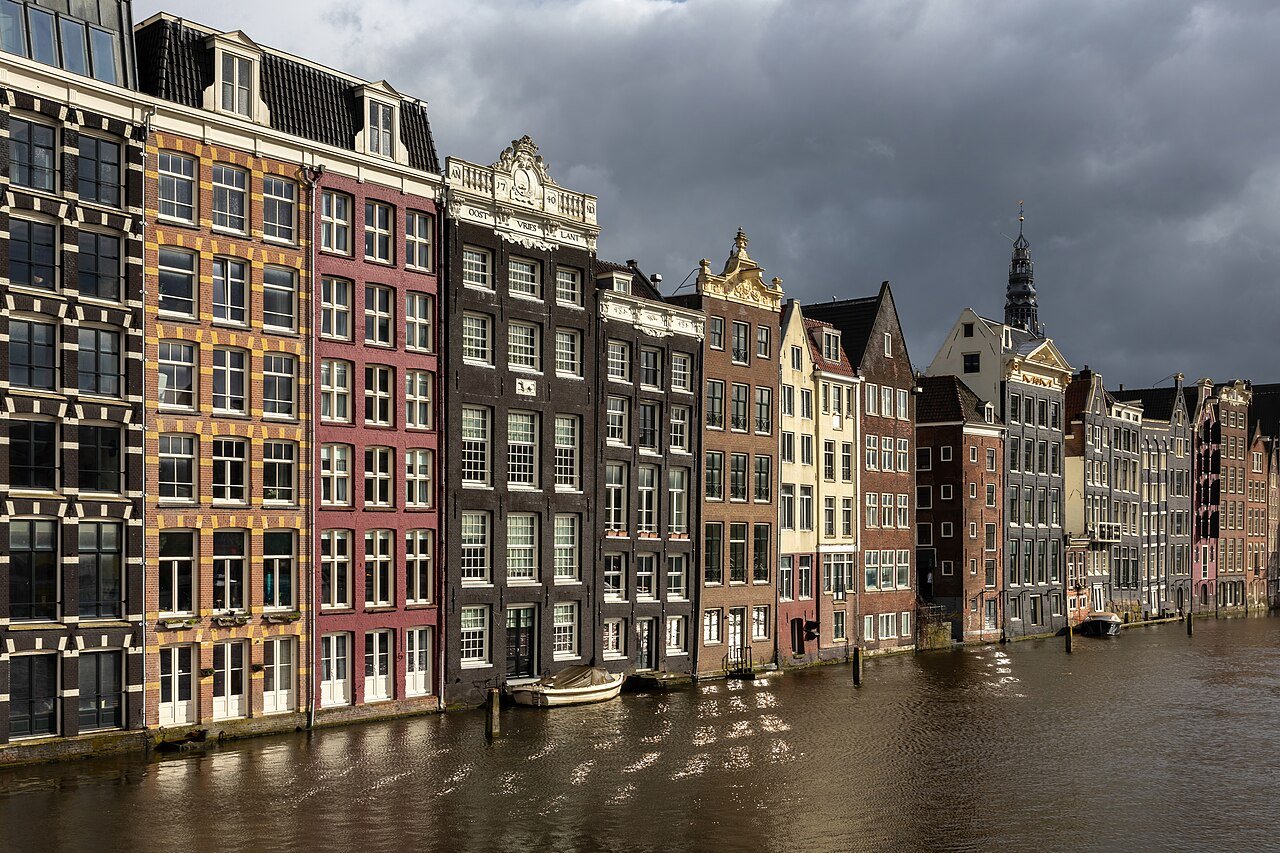
Photo: Wikimedia Commons
Households with a migration background hold 44 percent of the Netherlands' 2.2 million social housing units, double the share recorded in 2000, while the housing minister tells young Dutch nationals they can live with their parents.
Households with a migration background occupy 44 percent of the Netherlands' 2.2 million social housing units, according to data compiled by the platform Nederland In Beeld from Statistics Netherlands (CBS) datasets. That works out to approximately 972,000 homes. The country's overall housing shortage stands at 410,000 units, a figure dwarfed by the migration-background share of the social stock.
The 44 percent share has doubled from 22 percent in 2000 and is forecast to climb to 51 percent by 2030, Nederland In Beeld projects. When third-generation households are included, the estimate rises to 1.2 million units, or 55 percent of the entire social housing stock. Ninety-two percent of first-generation Syrian immigrants in the Netherlands reside in social housing, as do 90 percent of those born in Somalia, Afghanistan, and Eritrea, according to the same data.
Housing Minister Elanor Boekholt-O'Sullivan of the D66 party offered a defence this week that drew immediate criticism. Asked by De Telegraaf why status holders receive priority access to social rental homes while young Dutch first-time home seekers face waiting lists stretching years, she said many Dutch starters "can still, or are allowed to, live with their parents." She added: "For me, the fundamental principle is that anyone who is allowed to and wants to live in the Netherlands gets a roof over their head."
The numbers do not support her position. An annual report by consultancy Capital Value, as cited by De Telegraaf, found the housing shortage has grown from nearly 400,000 to 410,000 homes, now equivalent to 4.8 percent of total housing stock. Previous governments had aimed to reduce that share to 2.1 percent by 2031; it is now projected at 3.9 percent. A report from the Economic Institute for Construction (EIB) found that migration accounted for roughly 60 percent of additional housing demand between 2015 and 2024, with migrants arriving in that period occupying approximately 435,000 homes out of the nearly 700,000 added to the stock.
Status holders move to the front of the queue fast. Refugees can secure a social housing unit in as little as 14 weeks, while many Dutch nationals wait up to 12 years, according to data cited by Remix News. When allocations are limited to first-time placements, status holders account for 28 percent of all social housing slots, according to Nederland In Beeld. Minister Boekholt-O'Sullivan argued that leaving status holders in asylum reception centres, hotels, or on cruise ships was unacceptable, and said priority allocation should continue until other solutions are found.
Dutch commentator Eva Vlaardingerbroek challenged that position on X. "A 25-year-old Syrian who came here with his parents years ago jumps the queue for a home when he decides he wants to live on his own. Meaning a 25-year-old white Dutch guy can forget about getting his own place and ends up on waiting lists for 10-plus years," she wrote. She called the arrangement an instance of "systemic racism."
The housing dispute sits inside a wider fiscal picture. A study titled "Borderless Welfare State: The Consequences of Immigration on Public Finances" calculated that net costs of immigration to the Dutch public sector between 1995 and 2019 totalled €400 billion, averaging €17 billion a year and peaking at €32 billion in 2016 following the 2015 refugee crisis.
A minister who tells young citizens to stay with their parents while the queue moves for new arrivals is not managing a housing crisis; she is choosing who it serves.
Sources
Published October 16, 2026 · Frisian News