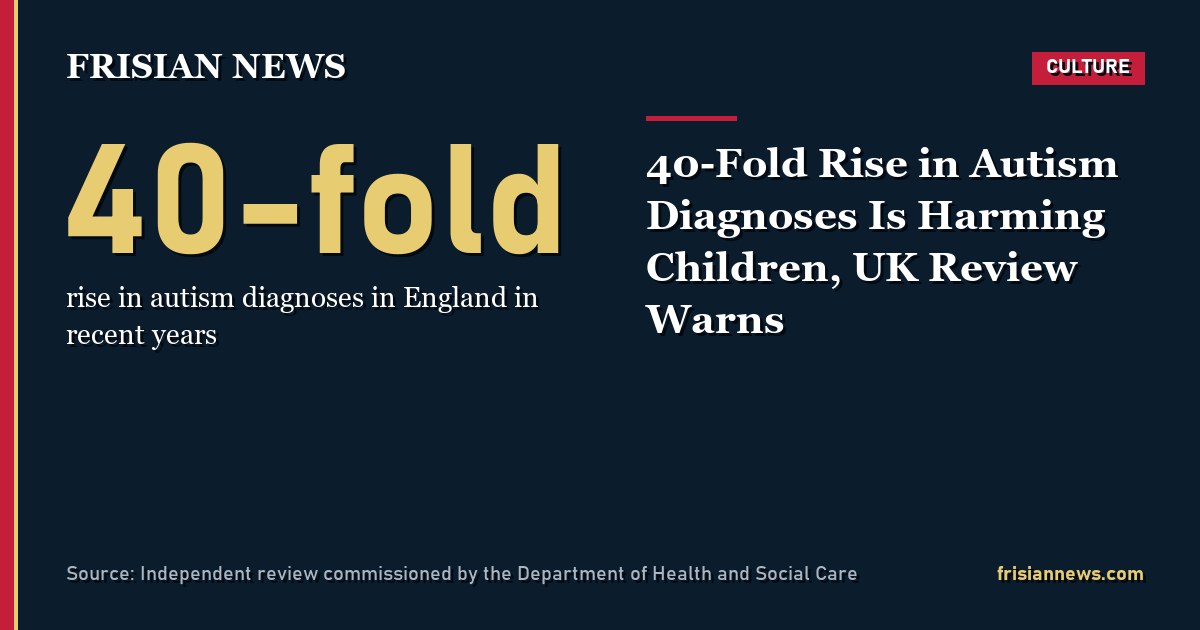
40-Fold Rise in Autism Diagnoses Is Harming Children, UK Review Warns
October 11, 2026 · Frisian News
A government-commissioned review published October 9, 2026 found autism diagnoses in England have risen up to 40-fold with no evidence of a genuine increase in prevalence. The 599-page report calls the current model harmful and demands radical reform.
Autism diagnoses in England have risen by up to 40-fold in recent years, yet the government-commissioned review published by the Department of Health and Social Care on October 9, 2026 found no evidence that the actual number of autistic children has increased. The 599-page report, led by Professor Peter Fonagy, head of the UCL Division of Psychology and Language Sciences, concludes that the current model of care fails patients and requires "radical reform."
The numbers carry a direct cost. Children diagnosed with ADHD and autism before the age of 17 are around four times less likely to be in education, employment or training in early adulthood, the review found. Professor Fonagy's review calculated that each young person in that position costs taxpayers £244,000 over their lifetime.
More than 4% of children aged six to 17 now carry an autism diagnosis, the BBC reported, citing the review. Studies suggest the true prevalence is 1 to 2%. Private firms conduct more than half of NHS-funded ADHD assessments and a third of autism assessments, yet they remain poorly regulated and are permitted to advertise directly to potential customers, with the NHS covering the bill.
A survey of GPs found that many had never known a private provider to reject a diagnosis request, according to the review's findings as reported by the Daily Sceptic. Professor Fonagy called misdiagnosis and overdiagnosis "harmful," saying they may lead to unnecessary or inappropriate treatment, delay support for other conditions and lower expectations of what children can achieve.
The official response did not match that urgency. Health Secretary Yvette Cooper welcomed the report and said the government would set out a new model of support in a forthcoming mental health strategy expected before the end of 2026. Yet the review's own data shows that a diagnostic label tends to close doors rather than open them. Professor Sir Simon Wessely, Vice-Chairman of the review, warned a diagnosis could "define you by your difficulties, not your strengths, circumstances, and potentials."
The welfare system amplifies the problem. Schools and benefits structures incentivise parents to secure diagnoses for their children, the review found. Social media posts present common traits as evidence of conditions, pushing more families toward assessment. Conservative work and pensions spokesman Helen Whately said sickness benefit claims had doubled since 2019. "Children are told something is 'wrong' with them, put on disability living allowance then move straight on to personal independence payments," she said. "All they ever hear is what they can't do."
A 2014 rule change requiring a formal diagnosis of autism or ADHD before children could qualify for extra school support created a powerful pull toward assessment, the BBC reported. Families with genuinely complex needs, such as Ryan and his son Atlas, who waited three years for an autism assessment while the boy's needs became increasingly clear, face the same queue as those whose children's difficulties may reflect normal variation in development.
The review called for tougher regulation of private assessment providers, a ban on their advertising, and a reassessment of waiting lists to prioritise the most complex cases first. Professor Fonagy said diagnosis "remains essential" but must no longer be "the only door through which help can be reached."
A system that rewards labels over outcomes has turned a medical tool into a welfare gateway, and the children are paying the price.

Published October 11, 2026 · Frisian News